NOKIA ACCIDENTALLY LEAKS AN INTERNATIONAL WHITE LUMIA 900?

Did Nokia accidentally reveal a white Lumia 900 on Facebook?

Next iDevice from apple

With all the iDevices found in the market from iPhone, iPod Touch, iPads to Macbooks, do you think there’s still lacking?

The future of smartphones from the world of concept phones

Ever since the birth of science fiction in the 19th century people have enjoyed predicting what the future holds for technology.

Tuesday, 27 December 2011

Top 10 Most Anticipated Gadgets of 2012


It’s that time of the year again, and we’re not talking about Christmas here. It is that time where the beginning of the new year means a whole new slew of gadgets to look forward to. Now, as far as 2011 is concerned, many were thrilled upon the news of the iPad 2 and many were also disappointed with the iPhone 4S not being the iPhone 5. For the other end of the spectrum, we got a slew of Android devices like the Galaxy Nexus and Galaxy Note, as well as the release of Ice Cream Sandwich to end the year. 2011 also saw the tie-up of Microsoft and Nokia to hopefully bring in new gadgets, as well as bring Nokia some hard-needed revenue. With all of these said, what could we expect in 2012, the year when the world’s supposed to end?
iPhone 5
Despite the iPhone 4S being a great device overall, the lack of physical changes, as well as the simple addition of “S” to the predecessor’s moniker made people skip this release. It is in this vein that many are really anticipating and eagerly waiting for an “actual” new iPhone. Speculations like the aluminum backing and a bigger 4 inch screen is making many excited. Will Apple actually make this wishful thinking a reality?
iPad 3

The iPad was a sure game-changer when it came out a couple of years ago. Then it just got a lot better when the iPad 2 got released during the first half of 2011. So how will they improve on this tried and tested device/concept with its third iteration? Add to that the fact that we lost Steve Jobs late in 2011, will there be chances that the iPad will go on a different route under a different direction? Well, everyone’s hoping for a quad-core processor to power this thing, making it the next best mobile gaming device. Again, another wishful thinking for the Apple fans?
Samsung Galaxy SIII
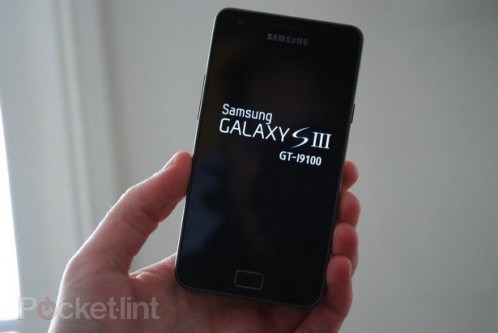
Ok, don’t get us wrong on this, but while the Galaxy Nexus is a nice phone in itself, it doesn’t have the vibe that the Galaxy S, or the SII had when they were released. Given that Samsung really got a lot with the SII, selling around 10 million copies of the phone, many are left to predict that they’ll continue the winning formula with the third installment of the Galaxy S series of phones – hopefully to catch up with Apple and it’s flagship device.
Xbox 720?
It’s been a while since the latest generation of gaming consoles were released and we believe that they’re nearing the end of their cycles. With that said, the loudest of all these rumored next-generation consoles is Microsoft’s Xbox 720. It’s a no brainer how they came up with that name but here’s the rumored specs for the console. It is said to have an 8-core processor, supports 3D, multiTV, live TV and webcam functionality (i.e. a built-in Kinect?). In any case, Microsoft is rumored to release the 360′s successor in 2012.
Nintendo Wii U
Being at a technological disadvantage against the Playstation 3 and Xbox 360 didn’t stop the Wii from being a household name in gaming and entertainment overall. It’s focus on interactivity even forced the competition to release products similar to the Wii’s concept. So how will Nintendo up their game? Simple, just add a “U” to the Wii. Yeah, that name still makes us do weird reactions, but Nintendo is betting that the Wii U will once again dominate the gaming scene with the addition of a new controller with a built-in 6-inch touch screen among the other improvements they’ve placed in it. Nintendo is set to release the Wii U in March 2012 and until then, we can only speculate of how it will fare.
PlayStation Vita
Trying to forget the gadget that was the PSP Go, Sony is eyeing on the success that the PlayStation Vita will bring as much as the original had which sold almost 90 million units in its entirety. And this is one small beast never to be underestimated with its quad-core processor a front touch screen and a rear touch pad, two analog sticks and the socially-integrated UI that still is a lot of getting used to. And while the PSP Vita recently got a Japanese release in mid-December, those in the western hemisphere would have to wait until February to get their hands on this gaming device.
Quad-Core Mobile Phones/Tablets
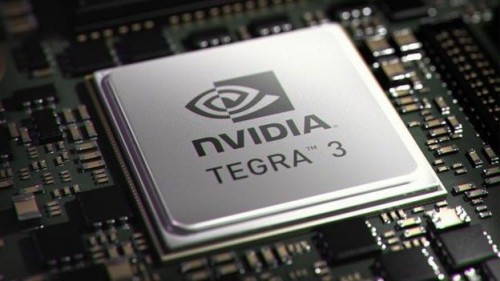
With Nvidia introducing their Tegra 3 quad-core processor, gone are the days where desktops and high-end laptops were the only ones to get the quad-core treatment. ASUS immediately jumped on the gun with their Transformer Prime (despite being sued for the name) and placed the Tegra 3 chipset to power this device. This proved to be a great choice as the Transformer Prime was indeed a very fast tablet and this sets the precedence for more quad-core devices to come out of the market, hopefully in 2012. So yeah, mobile computing will really be a notch higher with these kinds of devices coming.
MacBook Pro + Retina Display
There’s no denying that any Apple device that has Retina Display in it gives out the most beautiful of screen visuals. And people are actually wishing that devices other than the iPhone be equipped with the same screen. Specifically, they wanted their MacBook Pros to have a resolution on par with the Retina Display or something at a resolution of 2880 x 1800. Now recent rumors were pointing to this feature and people are hoping that they’ll be gettng this one in 2012. But again, keep your grains of salt handy.
"UltraBooks"
You’re probably wondering, "What the heck are UltraBooks?" Well, take the concept of NetBooks and make them thinner yet powerful. Not much is known of how portable or how powerful these UltraBooks may be, but the leading manufacturers (i.e. ASUS, Acer, Samsung) are further making their devices thinner and at the same time, with the dawn of the more powerful mobile devices, it is possible to have these cheaper laptops on higher-end specifications.
Apple HD-TV
The list makes a full circle with another possible offering from Apple. This time, it is the expected release of their Apple HD-TV. Yep, it’s not just that small box that you’ve known Apple TV to be. This is an actual TV set, ranging from 15 to 19 inches that is bundled with iOS inside. Add to that, you can actually play games, run apps and integrate social networking sites as much as you do with your iPhone or iPad. So yeah, even in TV sets, Samsung and Apple are destined to be rivals.

Friday, 23 December 2011

Anti-SOPA activists launch GoDaddy boycott


SOPA opponents have launched a concerted boycott of domain name registrar GoDaddy after its support for the anti-piracy legislation became widely publicized.
godaddy-boycott
The great battle for the open Internet continues today, with opponents of the Stop Online Piracy Act (SOPA) and the Protect IP Act (PIPA) launching a boycott of domain name registrar GoDaddy, which has written the House of Representatives to express its strong support of the controversial legislation.
Earlier today, Reddit user selfprodigy submitted a post to Reddit.com, the title of which reads, “GoDaddy supports SOPA, I’m transferring 51 domains & suggesting a move your domain day.” That ‘move your domain day’ appears to have started. The post has sat atop Reddit for hours, with countless comments expressing their support for the boycott, and many saying that they have transferred their domains to another registrar.
While Silicon Valley firms like Google, Facebook and Twitter overwhelmingly oppose SOPA on the grounds that it will usher in unprecedented censorship online, suffocate innovation, and endanger the domain name system (DNS) upon which the Internet is built, GoDaddy brushes aside all these arguments, and claims that the bill is needed to “identify and disable all types of illegal activity on the Internet.”
In addition to claiming that SOPA “[is] not going to break the Internet” by tampering with the DNS — something dozens of technical experts say is a serious risk — GoDaddy also tells the House that SOPA “cannot reasonably be equated with censorship.”
“This bill promotes action pursuant to preexisting criminal and civil laws,” continues GoDaddy in its filing with the House. “Not only is there no First Amendment concern, but the notion that we should turn a blind eye to criminal conduct because other countries may take oppressive steps in response is an affront to the very fabric of this nation – that we abide by a set rule of laws, regardless of what actions other countries choose to take or not take.”
This goes firmly against the Stanford Law Review’s take on SOPA, which is that it will, in fact, “break the Internet,” and violate the Constitution in the process.
“The Supreme Court has made it abundantly clear that governmental action suppressing speech, if taken prior to an adversary proceeding and subsequent judicial determination that the speech in question is unlawful, is a presumptively unconstitutional ‘prior restraint,’ writes the Stanford Law Review. “In other words, it is the ‘most serious and the least tolerable infringement on First Amendment rights,’ permissible only in the narrowest range of circumstances. The Constitution requires a court ‘to make a final determination’ that the material in question is unlawful ‘after an adversary hearing before the material is completely removed from circulation.’ The procedures outlined in both bills fail this fundamental constitutional test.”
(Here is the link for the full Stanford Law Review article. At the time of this writing, the site is, however, offline for reasons unknown to us.)
Regardless of whether GoDaddy is right or wrong about the impact of SOPA, it remains incomprehensible as to why a company that is likely in violation of the bill would support Congress voting it into law.
As TechDirt’s Mike Masnik, who has covered SOPA exhaustively, notes, GoDaddy would fall under the SOPA definition of a “site dedicated to the theft of US property,” since it offers “goods or services in a manner that engages in, enables, or facilitates… the sale, distribution, or promotion of goods, services, or materials bearing a counterfeit mark.”
In other words: GoDaddy is pushing for legislation that, as written, could kill its business.
Still, the company is standing by its support for SOPA, and reposted its letter to the House on its website, after a flood of calls and emails poured in from anti-SOPA activists.
With an untold number of customers fleeing from GoDaddy, competing registrars have swooped in to pick up the slack. Many of them have begun offering promotional codes to draw in disgruntled customers. They include:
• Name.com: Use code “NODADDY” for 10 percent off transfer-in domains, and 40 percent off hosting.
• HostGator.com: Use code “NOSOPA” for 50 percent off the first month of hosting.
• NameCheap.com: Use “BYEBYEGD” or “SOPASucks” or “XMASJOY” for a discount.
Of course, GoDaddy is far from the only company that supports SOPA. Check out our list of hundreds of companies that either explicitly support SOPA, or have written Congress in support of similar legislation. To see who has come out against SOPA — a much longer list — click here.
To learn how to easily transfer your domain from GoDaddy to another registrar, see these instructions.

Thursday, 22 December 2011

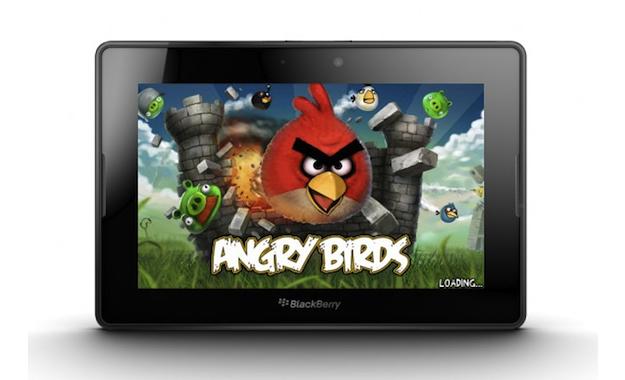
The Angry Birds finally get a BlackBerry, as popular game lands on the PlayBook


Rovio has released their incredibly popular range of Angry Birds games in the BlackBerry AppWorld, but at this time they're only for the PlayBook tablet.
Angry Birds BlackBerry PlayBookIt may seem as if Angry Birds is available on just about every platform known to man, however up until today they hadn’t made it on to Research in Motion’s BlackBerry devices. But before all you Curve, Bold and Torch owners go rushing off to the AppWorld, the Angry Birds have so far confined themselves to the PlayBook.
While this will upset legions of fans, those who do own the BlackBerry PlayBook will be pleased to discover it’s not just the original game that’s available, but all three titles. The first Angry Birds has all 288 levels of catapult fun, while Angry Birds Seasons contains 205 levels including the most recent Halloween update, although there’s no mention of this year’s Christmas-themed levels out now for other platforms.  Finally, there’s Angry Birds Rio, Rovio’s film tie-in which takes an ever-so slightly mixes up the standard formula.
All three games are priced at $4.99, which is more expensive than the HD versions for the Apple iPad, and considerably more than the free versions available for Android tablets. The PlayBook editions aren’t blighted by any in-game advertising though. A total of $15 may sound quite a lot for three mobile games, but with more than 600 levels to play through in total, there’s a lot of fun to be had.
The Angry Birds franchise celebrated its second birthday earlier this month, announcing the game had topped 500 million downloads, and a company valuation of more than $1 billion.

Bluetooth certification reveals Sony Ericsson LT28at LTE super phone


A new Sony Ericsson "Super Phone" has been leaked via its Bluetooth certification entry, indicating features will include a 4.55-inch touchscreen and a 13-megapixel camera.
A new smartphone from Sony Ericsson has been revealed through its Bluetooth certification entry, and rather than being another for the European networks, it’s listed as a North American model only. The LT28at will be coming to AT&T and will connect to their LTE high-speed network.
Sony Ericsson LT28at BluetoothWhile it’s not the first phone to be leaked via Bluetooth’s site, the blurb features an unusually high level of detail. Described as a “tablet capacity super phone”, the LT28at will feature a 4.55-inch Reality Display touchscreen with a 720p, HD resolution. Sony Ericsson’s Reality Display screens can also be found on the Arc and Arc S phones, and it uses Bravia software enhancements to produce vivid colors and and sharp images.
The LT28at will also have a massive 13-megapixel camera that can also shoot 720p video. A series of images said to be taken with the camera have also been leaked, and even after being published on the web in a condensed form, still look absolutely fantastic.
Google Android is going to be the LT28at’s operating system, but which version hasn’t been stated, and a 1.5Ghz dual-core processor has also been linked to the new device. Other features include a forward-facing video call camera lens, Wi-Fi, Bluetooth (obviously) and dual microphones for noise suppression.
There are similarities here with the LT26i, codenamed Nozomi, which is also likely to feature a 1.5Ghz processor, but a slightly smaller 4.3-inch touchscreen

Wednesday, 21 December 2011

Yahoo expands sharing of stories through Facebook


Yahoo is deepening its connections with facebooks online social network.
The latest bond announced late Tuesday will enable Facebook users to share more of their activities on Yahoo's websites, including which stories they are reading.
Yahoo Inc. introduced the Facebook-sharing option in its main new section three months ago. The same feature will now be available in 26 other parts of yahoo's site, including its "omg" service for entertainment news and sections devoted to television, movies and games.
By tying more of its services to Facebook's popularity, Yahoo is hoping to give people more reasons to visit and stick around its website. Yahoo ultimately wants to sell more online advertising. That's an area where Facebook has been gaining ground as its website has emerged as a top Internet hangout.
As Facebook has become more influential, Yahoo has been struggling to remain relevant among Web surfers and online advertisers.
It's been a daunting challenge so far. Yahoo has gone through three different CEOs in the past four years while its revenue and stock price have drooped. The difficulties have prompted a board review that will culminate in a sale of all or part of the company.
Yahoo has been pleased with the results of Facebook-sharing so far. Traffic to Yahoo's news section from Facebook has tripled since that sharing feature was introduced, according to the company, which is based in Sunnyvale, California.
Apparently, a relatively small percentage of Yahoo's 700 million users want their online social circles to know what they're reading on the Web. Yahoo says about 12 million people have opted to share their tastes in news stories so far. The feature is particularly popular among young adults ranging from 18 to 24 years old, according to Yahoo.
Facebook sharing still isn't available on two of Yahoo's most popular sections, finance and sports. The company says those sections will be linked to Facebook early next year.

Tuesday, 20 December 2011

Android 4.0.3 to trickle out "in the weeks ahead"


google, android, sdk, smartphones, galaxy nexus, ics, mobile phonesOn Friday, Google announced 4.0.3 as the next incremental update to hit Ice Cream Sandwich, the colloquial name for its Android 4.x platform. This update features various bug fixes, optimizations and a handful of new APIs for developers.
Some of the new things in 4.0.3 are:
  • A "Social stream API in Contacts provider" which leverages social networking for developers, allowing them to show users what their friends are doing while tying in photos and contact information.
  • Improvements for calendar providers: Apps can now color calendar events and utilize ne attendee types and states.
  • Add camera capabilities: Apps can now manage and check for video stabilization. They may also use QVGA resolution profiles.
  • Improved accessibility: Screen readers can access more content and will enjoy text-to-speech status and error reporting.
  • Improve user experience: Small improvements and bug fixes for graphics, database, spell-checking, Bluetooth, and more.
This iterative improvement comes just after last week's news of 4.0.2 being released for the Galaxy Nexus (the International version). This is illustrative of the lag-time between Google, manufacturers and end-users as companies mull over each release to ensure compatibility with their handsets and their own Android customizations. Verizon's version of the Galaxy Nexus actually shipped with 4.0.2 already pre-loaded.
Ice Cream Sandwich itself brought many new and exciting features to the mobile platform. ICS improvements include a streamlined lock screen with facial recognition, ad-hoc-style wireless communication between devices and on-screen controls which eliminate the necessity for hardware-based navigation buttons. Google also aimed to improve the overall user experience by including to a new system-wide font labeled "Roboto" as well as redesigning and adding features to many of the platform's native apps

Google to release branded tablet within six months

google, motorola, nexus, tablet, xyboard
Google executive chairman Eric Schmidt has announced that his company will begin marketing a tablet to rival Apple and all others. Said tablet could be ready within the next six months, although any specific details regarding the device were left to the imagination.
In an interview with Italian newspaper Corriere della Sea, Schmidt praised the late Steve Jobs, pointing out that he realized the revolutionary potential of the tablet beyond vertical and enterprise markets by bringing it to the consumer level. He even called the iPad an amazing product but of course was quick to remind readers that the two companies are competitors and that Google plans to market a tablet in the next six months “of the highest quality.”
What we don’t know yet is if the new tablet would be a Google-branded product or if they plan to work with another manufacturer on a rebranded launch. We’ve seen a few Google-badged smartphones over the years so that route wouldn’t be unheard of.
But perhaps the underlying story here could be Google’s announcement to buy Motorola’s mobility unit back in August for $12.5 billion. Andy Rubin, senior vice president of mobile at Google, stated a few months later that the company had no plans to get into the handset manufacturing business as a result of the planned acquisition, but would those same rules apply to the tablet industry?
Motorola recently dropped two new tablets, the Droid Xyboard 10.1 and 8.2 as a follow-up to the original Xoom early this year, perhaps meaning a Tegra 3 tablet by the middle of next year would be right on track.

Monday, 19 December 2011

Microsoft announces Picture Passwords for Windows 8


Windows-8-picture-password
While the security of personal computers and mobile devices is always a priority for most consumers, Microsoft is taking password protection to the visual level with picture gestures.
Mentioned in great detail on the developer blog of the Windows engineering team, Microsoft is working on a method of logging into a computer powered by Windows 8 through a “Picture Password”. Likely designed for touchscreens, users are prompted with a familiar picture of their choice and asked to make a series of finger gestures on the screen to setup password protection. Microsoft recommends that users pick at least three gestures and can choose between a circle, a tap and a line drawn between two points. When a user logs into a Windows 8 machine using Picture Password, they simply have to replicate the correct placement, order and direction of all gestures. 
Gesture-GridMicrosoft dictates the set of three different gestures after research showed that login time was cut from 17 seconds using free form gestures to 4 seconds using preset gestures. Users don’t have to be 100 percent accurate with the placement of the gestures as the image is broken up into a grid and the combination of replicating the three gestures is assigned a percentage score each time the login process is attempted through an algorithm. If the score is 90 percent or above, the user gains access to the system.
Microsoft also outlined how security is increased with the Picture Password method. For instance, if a user creates a six-character text password with at least one uppercase letter and one number, there would be 7 billion combinations available. However, if a user creates a picture password with six gestures using only taps, that number increases to 1.3 trillion combinations. Even further, reducing the amount of gestures to five and including at least one circle and one line gesture within the group increases the number of combinations to approximately 70 trillion. The Windows engineering team has just started building the Picture Password functionality and hopes to include it within the final version of Windows 8 likely released during 2012.

Saturday, 17 December 2011

Microsoft launches So.cl social network for students


Microsoft Research’s FUSE Labs has launched a new social network designed with students in mind. The experimental site is called So.cl (pronounced “social”) and is initially being made available to students at the University of Washington, Syracuse University and New York University.
The learning and information-gathering tool is said to give students the ability to network with peers, share useful information quickly and build their own pages using information from inside and outside of the classroom. More specifically, the site was designed for students that are studying social media to expand their learning experience and “rethink how they learn and communicate.” Microsoft is essentially billing this as the new online classroom.
As for the feature set, think of So.cl as a stripped down version of Facebook. In fact, it’s actually built on top of Facebook. Users are asked to sign in using their Facebook account. Once in, users can post photos, text, video and more. Students can create communities around educational goals, allowing them to collaborate with like-minded individuals and even create their own social tools customized for their community.
Search is a key element of So.cl and as you would expect, it’s powered by Bing. Query results can be shared with other users which would likely make the most popular search items go viral.
Microsoft expects to open the site up to more schools in the near future as the service is fine-tuned and moves past the experimental phase.

Windows 8 to feature built-in password manager, synchronize between computers


Microsoft hopes to simplify the task of managing multiple passwords with the next major release of its popular operating system. According to a post on the company's Building Windows 8 blog, a new feature will allow users to put an unlimited number of individual passwords behind one master password, and have them synchronize across all other Windows 8 machines they use.
Since the Live ID is the only password you'll need to know, you can set complex and unique passwords for multiple websites -- so if one site gets hacked and your credentials are stolen from their servers, you entire digital lives won't be at risk. Windows 8 will automatically enter your login information when visiting a saved website. This is similar to what services like 1Password and LastPass currently offer.
If your Windows Live ID password is somehow lost or stolen, there will be a number of safety features in Windows 8 designed to detect compromise and limit account usage until you can successfully recover access to it. For instance, users can request a confirmation code be sent to a mobile phone number or email address registered with Windows Live. Also, even if your credentials are compromised, you will still have full access to your PC since Windows 8 will accept the last password successfully used to log onto the system.
Microsoft says it will also offer a a number of "convenience" sign-in methods such as Picture Password and biometrics -- they didn't go into details but promised to do so in a future update. You can read more about Windows 8's security features in the characteristically long post atBuilding Windows 8.
click here to know more

Friday, 16 December 2011

Microsoft to start releasing automatic Internet Explorer updates


microsoft, ie9, ie8, internet explorer, automatic updates, web browser, windows update
Microsoft announced today that it plans to start releasing automatic Internet Explorer updates in the near future. Starting next month, Windows XP, Vista and 7 users in Australia and Brazil will begin experiencing the silent rollouts. It's worth noting that this change will only affect those who opt into automatic Windows Updates, but we imagine that represents a significant portion of users considering how annoying the Windows Update notifications can be. There's no word on when this will be available to customers in other regions.
Although Microsoft is forcefully nudging users to update their browser, running the latest version of IE isn't completely mandatory. "While the benefits of upgrading are numerous, we recognize that some organizations and individuals may want to opt-out and set their own upgrade pace," Microsoft said. You can avoid the browser updates by installing the IE8 or IE9 Automatic Update Blocker toolkits. What's more, if you've previously declined the installation of IE8 or IE9, you don't have to worry about Microsoft pulling a ninja update.
Outdated versions of Internet Explorer have long been the bane of Web developers' existence, so having a majority of users running the latest version should make their life a little easier. Naturally, streamlining the update process will also improve security and help keep clueless users safer while browsing the Internet. Microsoft points to its recent Security Intelligence Report, which found that less than 1% of attacks in the first half of 2011 used zero-day exploits while 99% used familiar techniques such as unpatched vulnerabilities.